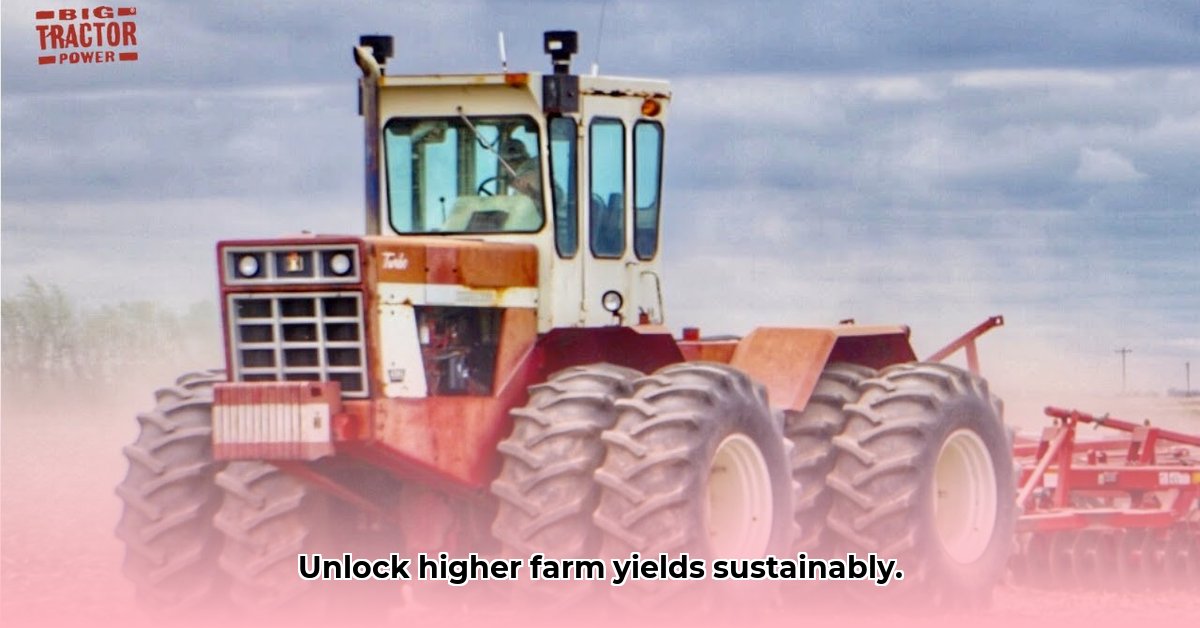
Case IH: A Century of Innovation in Sustainable Agriculture
For over a century, Case IH has been a driving force in agricultural innovation. From the revolutionary Farmall tractor, which dramatically increased farming efficiency, to today's technologically advanced machines, Case IH's legacy is deeply woven into the fabric of modern agriculture. This isn't simply a story of powerful machinery; it's a narrative of adapting to changing needs and embracing sustainable practices. The company's commitment to helping farmers increase yields while minimizing environmental impact is a key factor driving its continued success. How has Case IH achieved this balance, and what does the future hold for sustainable farming? Learn more about Case IH's history and innovation by visiting their website.
This article will explore Case IH's journey, its current market standing, and its role in shaping the future of sustainable agriculture. We’ll examine the technological advancements, financial considerations, and the collaborative efforts needed to cultivate a greener, more productive agricultural landscape. Given the rising global demand for food, how can Case IH technology help farmers produce more sustainably?
Addressing the Challenges of Modern Farming
Modern farming faces a critical challenge: meeting the world's growing food needs while minimizing the environmental impact of agricultural practices. This necessitates a delicate balancing act between maximizing yields and preserving resources for future generations. Case IH directly addresses this challenge by offering a range of high-performance tractors designed for both efficiency and sustainability. These tractors aren't merely powerful machines; they are sophisticated tools equipped with technology that optimizes resource utilization and minimizes waste.
Features like enhanced fuel economy and precision farming technology are pivotal in this endeavor. But technology alone isn't the complete answer. Affordability remains a crucial factor for farmers of all sizes. Case IH's accessible financing options, including 0% financing programs, make these vital technologies accessible to a broader range of farmers, fostering wider adoption of sustainable farming practices. Looking forward, what advancements in the next 5-10 years will further revolutionize sustainable farming practices?
Sustainable Farming: A Multifaceted Approach
The benefits of Case IH tractors extend well beyond fuel efficiency. Precision farming techniques, enabled by Case IH's technology, minimize waste by optimizing fertilizer and water usage. This not only boosts crop yields but also significantly reduces the environmental footprint of farming operations. "Precision agriculture is not just about technology," explains Dr. Emily Carter, Agricultural Engineering Professor at the University of Illinois. "It's about making data-driven decisions that improve resource efficiency and minimize environmental impact."
However, Case IH's commitment to sustainability goes beyond current technologies. They are heavily invested in research and development, exploring the potential of alternative fuels—such as electric or hydrogen power—that could significantly reduce greenhouse gas emissions and revolutionize the industry even further. How will the integration of artificial intelligence and data analytics shape the future of farm management and sustainability?
The Ripple Effect of Sustainable Agriculture
The benefits of sustainable agriculture extend far beyond the farm itself, producing a positive ripple effect across the entire agricultural ecosystem. This impacts various stakeholders in significant ways:
| Stakeholder Category | Immediate Advantages | Long-Term Gains |
|---|---|---|
| Case IH & Equipment Manufacturers | Increased market share, strong brand reputation | Technological leadership, continued growth in a vital sector |
| Small-Scale Farmers | Reduced operating costs, increased yields, improved profitability | Enhanced quality of life, greater economic resilience |
| Large-Scale Operations | Optimized operations, reduced expenses, increased efficiency | Enhanced competitiveness, sustainability leadership |
| Investors | Strong returns in a socially responsible sector | Robust financial performance, positive ESG impact |
| Governments/Regulatory Bodies | Reduced environmental impact, enhanced food security | Economic growth, sustainable development |
Reducing Greenhouse Gas Emissions: The Role of Case IH Tractors
Case IH's Selective Catalytic Reduction (SCR) technology is a significant step towards reducing greenhouse gas emissions. This after-treatment system injects Diesel Exhaust Fluid (DEF) into the exhaust stream, neutralizing harmful nitrogen oxides (NOx). This not only complies with stringent environmental regulations but also improves fuel economy, leading to lower operating costs for farmers. However, the implementation of SCR comes with its own set of challenges. What are the trade-offs associated with SCR technology, and how can these be mitigated?
Key Advantages of SCR:
- Significant NOx reduction: Meets stringent emission standards.
- Improved fuel efficiency: Lower operating costs.
- Enhanced engine performance: Increased power and reliability.
Considerations with SCR:
- DEF requirement: Added operational expense and logistical complexities.
Beyond SCR: A Holistic Approach to Emission Reduction
While SCR technology is a crucial advancement, a truly sustainable approach requires a more holistic strategy. This involves:
- Investing in Alternative Fuels: Transitioning to biofuels, hydrogen, or electric tractors is vital for long-term emission reduction. The development of these technologies is crucial for the future of farming.
- Embracing Precision Agriculture: Utilizing GPS-guided technology and data-driven decision-making minimizes resource waste, further cutting down on emissions.
This collaborative effort requires the involvement of various stakeholders: farmers, manufacturers like Case IH, governments providing supportive policies, and fuel suppliers ensuring a reliable supply of alternative fuels. The future of sustainable agriculture hinges on this collective commitment. What are the individual responsibilities of each stakeholder in achieving long-term emission reductions?
The Future of Farming: A Collaborative Vision
The journey toward truly sustainable agriculture is a continuous process, not a destination. Case IH's ongoing commitment to innovation, coupled with its accessible financing options, positions the company as a key player in this evolution. However, building a sustainable future requires collaboration. This includes supportive government policies, continuous technological advancements, and the widespread adoption of these technologies by farmers worldwide. The future of farming—and global food security—depends on this collective effort. Are you ready to be part of this transformative change?